 admin
admin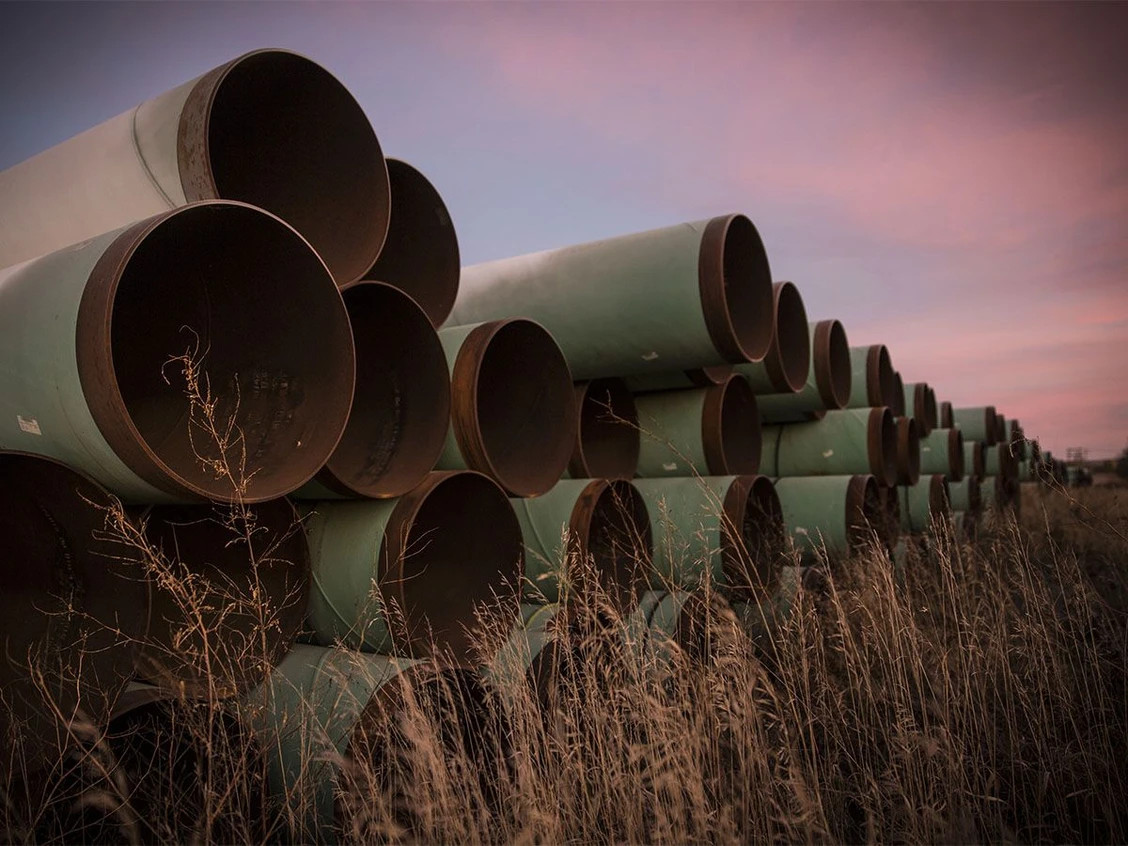
The timing may be tight, but it appears the Canadian oilpatch will be able to keep adding production without exhausting all available pipeline space in the coming months.
Article content
With a string of new pipeline expansions and projects progressing, it’s providing industry leaders and analysts confidence in the ability to add more egress, as was done in the early 2000s.
Article content
Article content
Article content
It’s also a far different outlook for the sector than in the past decade, which saw several large projects derailed or stuck in regulatory and legal limbo.
Article content
Article content
“It feels like kind of . . . back to the mid 2000s to say 2010-ish. It’s like that period again where we’re kind of on the edge of something really big,” Trans Mountain Corp. CEO Mark Maki said in an interview.
Article content
“There’s a number of things that have to come together. Now, you go back six years . . . there were barely any chess pieces on the board or puzzle pieces,” added Bevin Wirzba, CEO of South Bow Corp. “Now, there’s a lot of pieces on the board, but they’re not all connected yet.”
Article content
The comments, made last week at the Energy Roundtable event, capture the progress being made on the pipeline front as Canadian oil output continues to climb.
Article content
On Friday, South Bow announced that its open season — a process to determine long-term shipper interest in the company’s proposed Prairie Connector project, which would move more barrels from Western Canada into the U.S. — was successful.
Article content
The Calgary-based company expects to make a final investment decision on the proposed development by the middle of next year.
Article content
Article content
Prairie Connector would use 150 kilometres of pipe already in the ground in Canada that was initially intended for the Keystone XL project, and add new pipeline to move more oil south, where the system would link up to a new U.S. project proposed by Bridger Pipeline.
Article content

A second project would see new pump stations added to the system, pushing total capacity to almost 1.2 million bpd by the end of 2028.
Article content
In the longer term, the Alberta government is also proposing a greenfield pipeline to the Pacific Coast — operating no later than 2034 — although a route and project proponent have not been announced.
Trending
New solar farm starts up in ‘bright and sunny’ Saskatoon
Sask. RCMP working to identify victim in fatal Pelican Narrows shooting
Cameco, Orano expand their dominance as they buy out partner in Saskatchewan uranium mine
UPDATED: Four houses destroyed, 20 properties damaged as crews determine cause of Hampton Village blaze
UPDATED: Two shot, one dead and arrest made after dangerous person alert in Pelican Narrows
Article content
The Trans Mountain system, which can access markets in Asia, is expected to be “close to full” this month for the first time since a $34-billion expansion project was completed and began operating in 2024, Maki noted.
Article content
A final investment decision (FID) on its new optimization initiative could be made later this year.
Article content
“We are pre-ordering stuff. We see the economics. We see the shipper demand,” Maki said. “It’s a highly, highly likely project.”
Article content

Trans Mountain Corporation CEO Mark Maki was photographed in the company’s Calgary offices on Thursday, Jan. 16, 2025. Gavin Young/Postmedia
Article content
Consultancy S&P Global Energy has forecast that Canadian oil production is expected to increase by about 500,000 bpd above last year’s levels, exceeding 5.8 million bpd, by 2030.
Article content
In a recent report, S&P Global estimates that effective pipeline export capacity averaged 4.9 million bpd last year, while surplus capacity averaged just over 300,000 bpd for the year.
Article content
“By as early as the winter of 2026–27, supply could more materially overtake export pipeline capacity if existing pipeline systems are not expanded,” it noted.
Article content
However, under its base case scenario, the extra capacity of pipeline projects already announced would accommodate Western Canada’s export volumes.
Article content
Article content
“Putting aside some tight periods through the winter months, the system does look like it should balance,” Kevin Birn, Canadian oil markets chief analyst with S&P Global Energy, said Monday.
Article content
“We are moving back into a period where we need those expansions to come online . . . If these things come in as advertised, the system should be able to clear and we should avoid those (wider oil price) differentials. But timing is everything when it comes to pipelines.”
Article content
Analyst Nate Heywood of ATB Cormark Capital Markets noted higher commodity prices, due the conflict in the Middle East, are incentivizing increased oil output in Western Canada. If production exceeds pipeline capacity, it could lead to more oil moving by rail and a wider differential affecting Canadian crude prices.
Article content
“With pipeline projects typically taking years to get into service, we are lucky right now we have these optimization projects that are very short cycle in nature,” he said. “And if the timing doesn’t line up for a couple of months, it is very temporary in nature.”
Article content
Heywood estimates the spare capacity of oil pipelines out of Western Canada is currently between 100,000 and 150,000 bpd.
Article content
Maki said he sees a “stair-step” of new transportation capacity coming online that should match up with higher production.
Article content
“Coming into this year, I was worried,” he said.
Article content
“But I think there’s enough (new capacity) that will be delivered in ‘27, we should be OK.”
Article content
Chris Varcoe is a Calgary Herald columnist.